

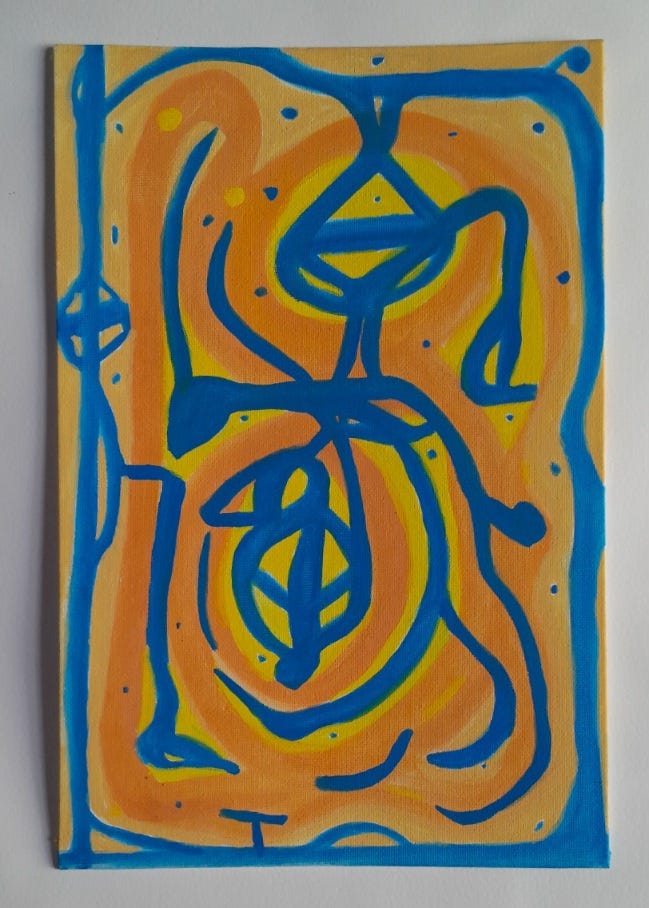
I am getting into simple paintings at the moment. I have an aspiration to one day become a live painter. I could paint in town centres on a Saturday, or at festivals, maybe even at raves. At the moment, I just don't have the energy or health to do it; but if I ever feel well enough I think that's what I will try to do. It occurred to me that painting live, much like playing music live, might be a way to adapt to AI and help sell some paintings, as well as socialise and make connections.
Gouache dries quite fast, almost as fast as acrylics, so it’s possible I could sell the paintings as I make them (-;
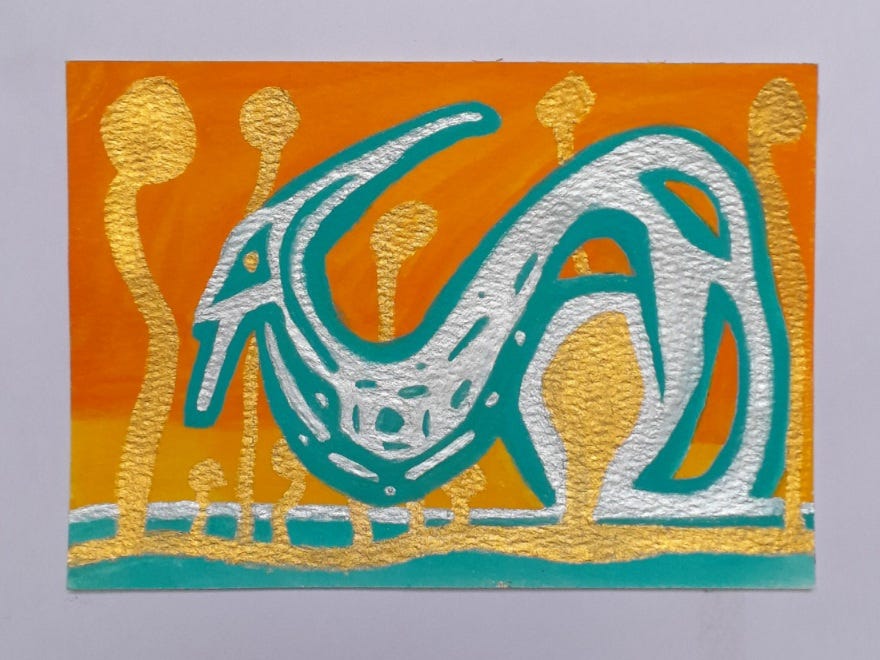
There’s nothing wrong with trying to sell artwork. One needs a livelihood after all. Why is it wrong to sell something you have crafted? That’s ridiculous. I don’t believe in the poor starving artist trope that often gets an airing on social media. I believe in artists being prosperous, living well, and being happy. They deserve this just as much as anyone else does. There is nothing wrong with that.
But I try not to think about money or the opinion of others when I’m painting, otherwise it can get in the way of experimenting and being creative. I prefer to forget the world when I’m painting. It’s okay to think about money afterwards, but not when I’m being creative. I try to find a balance between the two. There’s a time for thinking about money, and a time to not think about money.
Money in itself is not evil. It’s the desire for money that can lead people to do unskilful things. Balancing that desire feels important to me.
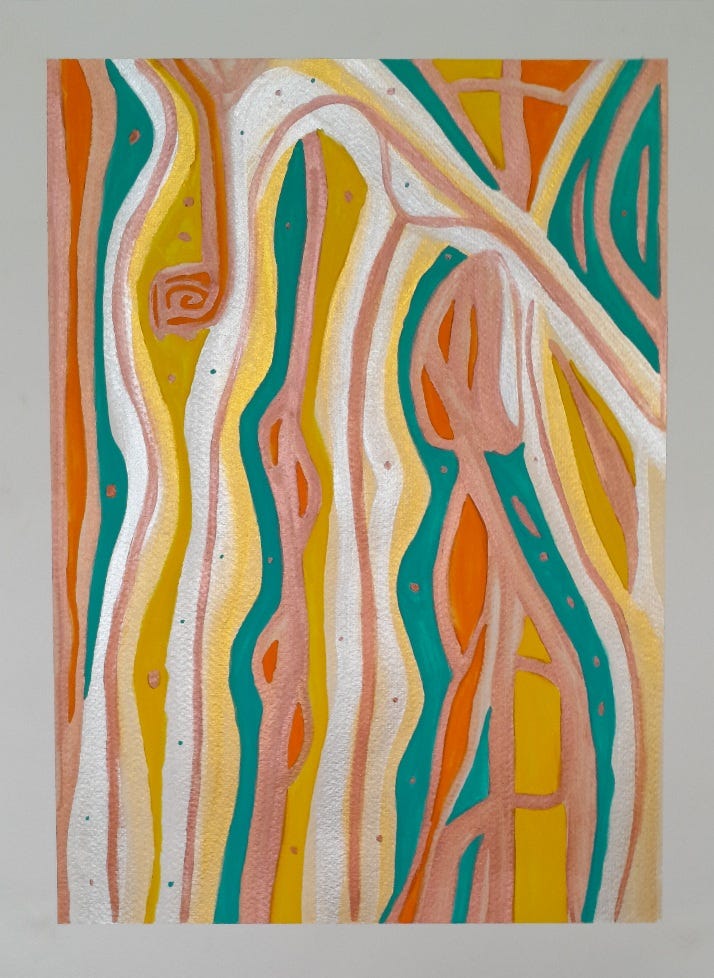
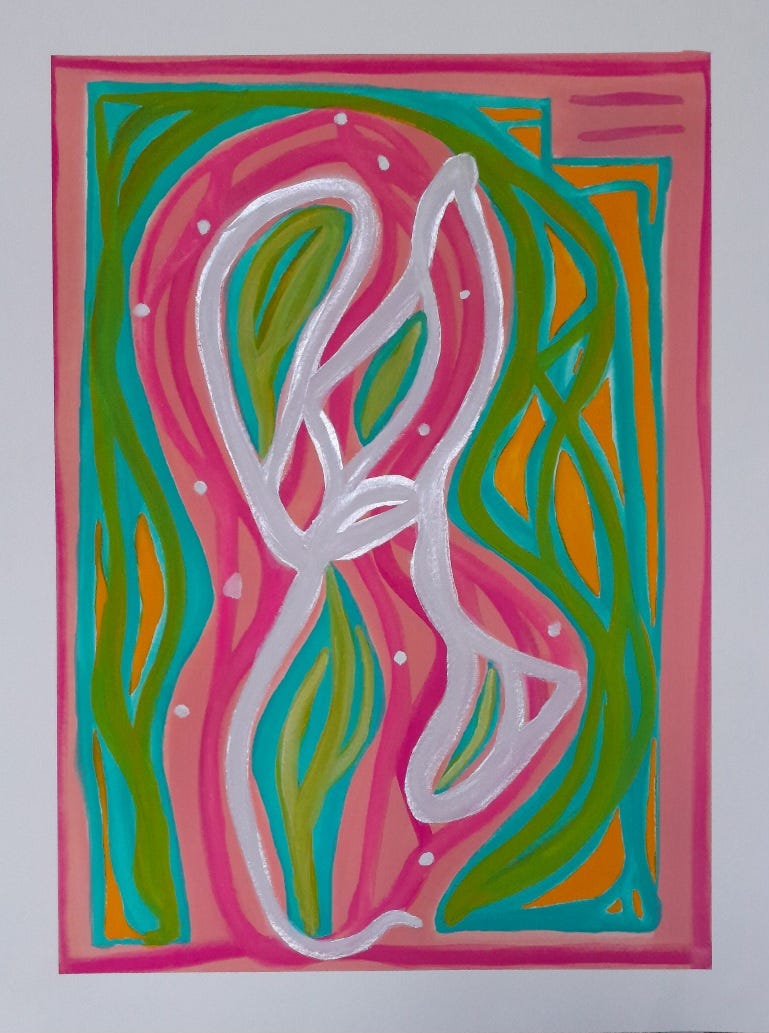
My paintings are a lot about balance. I don’t know what the painting will become. Different choices lead to different outcomes. Each piece paints itself. I keep at it until the energy of the piece feels balanced. It can turn out very different from how it started.
I often reflect on the Dhamma when painting, so it is like I am balancing the mind at the same time as balancing the colour and form in the painting.
I don’t always get it right, there is an archive of unfinished paintings behind my door, that may get finished one day. They were ones that didn’t quite work and I have set aside, but they are also the ones I learnt a lot from, so they weren’t a waste of time, supplies, or effort. In art nothing is wasted.
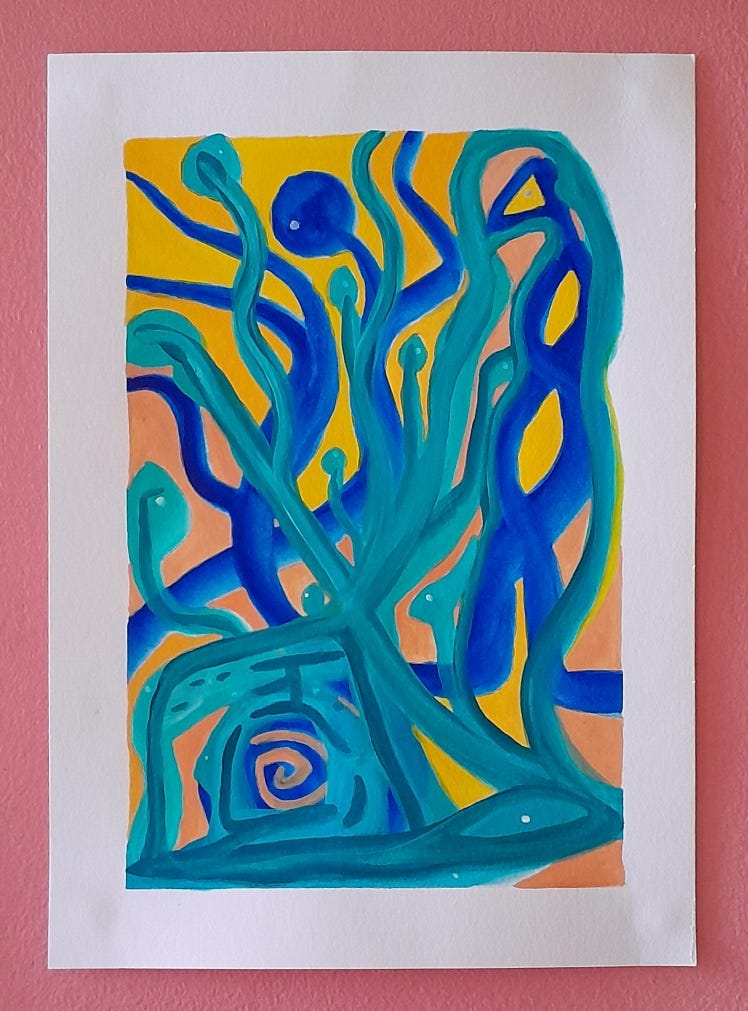
The Four Noble Truths
The truth of suffering, which is to be understood.
The truth of the cause of suffering, which is to be abandoned.
The truth of the end of suffering, which is to be realised.
The truth of the way that leads to the end of suffering, which is to be developed.
I often reflect on the four noble truths. I find it very helpful to do this throughout the day.
I have simplified it now in my mind to:
Grasping
Craving
Nibbana (release)
And the Noble Eightfold Path
Grasping can also be thought of as clinging, identifying, or even as feeding. I prefer the word grasping as it reminds me of the mind’s tendency to acquire things and hold onto them. This tendency of the mind feels stressful and dissatisfying because of impermanence, or change. Nothing lasts, and it is the grasping itself which is stressful. It is an activity, samsara is an activity, it is something that I keep doing in the mind that I don’t have to.
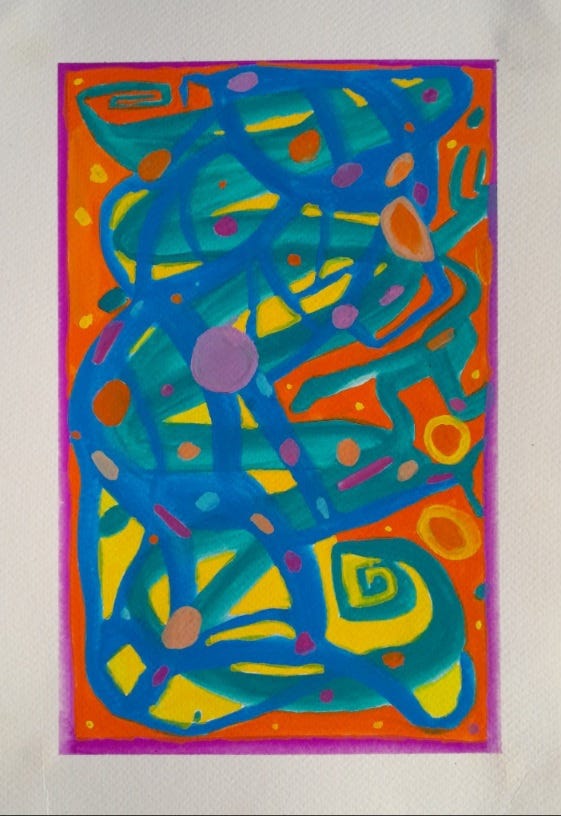
Craving is the cause of grasping. Craving can also be thought of as appetite. The craving for pleasant sights, sounds, tastes, smells, touch, and ideas. The craving for unpleasant sights, sounds, tastes, smells, touch, and ideas to not exist. And the craving for stimulation, the craving to live, to exist.
Not all desire is unskilful. Some people often misunderstand this in Buddhism. Desire is part of the path, it is desire that motivates one to free oneself from suffering. It is part of the sixth factor of the noble eightfold path, right effort.
In order to make effort to change our behaviour, to intitiate an action, we must generate the desire to. We have to motivate ourselves, talk ourselves into doing it.
Unskilful behaviour arises because the mind is ignorant. There are deep parts of the mind that haven’t understood the truth of impermenance and so those parts of the mind still cling and suffer out of ignorance. This is why samadhi practises are necessary to calm, unify, and steady the mind, so it can see clearly. Right samadhi is the eighth factor of the path. All the factors work together to bring about release.
Letting go of something is hard when we still want it.
Dispassion is a quality that develops as one keeps looking at the allure and drawbacks of what it is we desire. It comes from contemplating change, or the impermance of things. Dispassion helps to cool the craving which in turn causes us to cling less tightly to things.
Things that were once interesting and desirable start to lose their allure. It’s not a bad thing when this happens. It’s similar to when a child grows out of their toys. Dispassion naturally inclines the mind to seek higher things. To seek freedom and something unconditioned, something that will last. Which then leads to the deathless, to release. To letting go. To the end of grasping.
It all sounds quite simple, but it isn’t. The mind is conditioned by our past behaviour and the world around us. Changing these habit structures of the mind is challenging. It goes against the grain of the subconscious. But to realise freedom, the mind needs reconditioning, reprogramming; which is where the training of the noble eightfold path comes in.
It's a gradual training, not something that brings instant results, and it may take more than one lifetime to fully realise the fruit of it.
The fruit of the path is said to be far better than anything the world can offer. Even the most expensive yachts and luxuries of the world are like slums compared to nibbana. The mind of a fully awakened being is beyond all that, beyond worldly comprehension. Nibbana is a contented peace that cannot be put into words, or taken away. Those who do realise it, never look back or regret their decision to walk the path.
Nibbana is freedom from emotional suffering. The physical suffering is still there, the body will still get sick, age, and die. This happens whether one is enlightened or not. It’s the psychological suffering that comes to an end, leaving behind a lasting stable peace of mind, which is more valuable than any treasure or worldly success.
I, like pretty much every one else on Earth, have said and done things I regret. At times I use that regret as a fuel to keep working at developing the path. To motivate me to grow more in the Dhamma. I don’t give myself a hard time about the past, there’s no self-loathing, but I do try to grow wiser from it and become more skilful.
Buddhism teaches that with effort one can change their mind and change the way one thinks. We can change the way we talk to ourselves, the way we narrate things in our minds.
We aren’t prisoners of fate. To some extent there is fate. The moral choices we make, our intentional actions, shape who we become, but those becomings are not set in stone. One can change the direction one is heading in by making wiser choices now. This gives me hope, and I find it encouraging and uplifting to remember this.
Developing the path takes time and patience, like learning to play a musical instrument or a sport takes time and patience. But there comes a tipping point when some muscle memory has developed where the new habit starts to feel more natural, more like second nature, and becomes automatic and subconscious. Then less effort is needed and things get easier.
What we practice we become.